Hardwood Floor Cleaning in Arlington, TN
Hardwood floors in Arlington homes look sharp when they're properly maintained, and tired when they're not. The trouble is that "properly maintained" goes well beyond running a dust mop across the surface once a week. Fine grit — the kind you can feel underfoot but barely see — settles into the wood grain and micro-scratches the finish with every footstep. Spray cleaners leave behind a hazy film that looks shiny for a day, then attracts more soil and builds up a cloudy layer over time. And West Tennessee's humid air causes a thin film of airborne grime to bond to the polyurethane in a way that dry-mopping alone can't break.
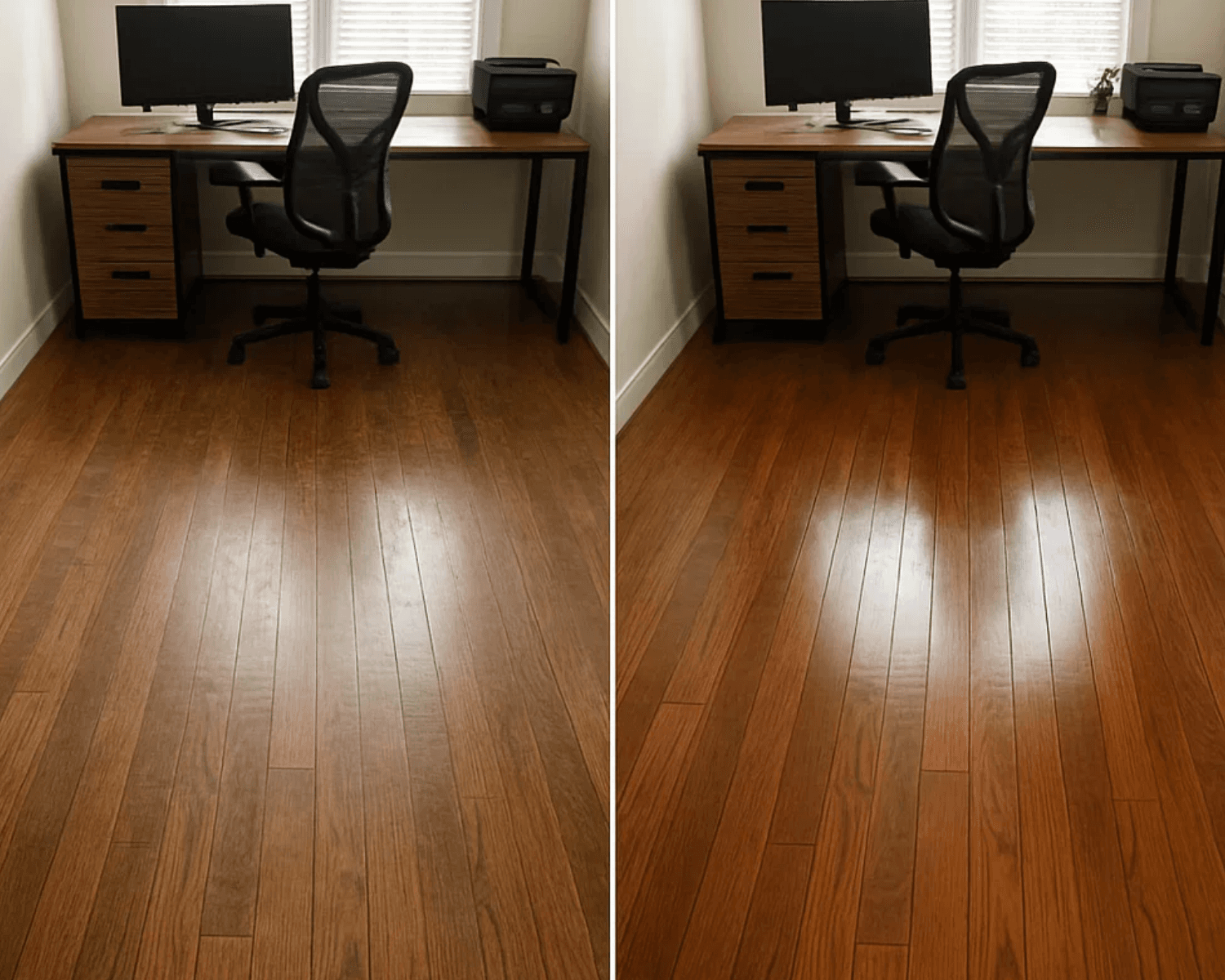
After a year or two of this, your floors go from sharp to flat. Not damaged — just faded from what they used to be.
Safe-Dry Carpet Cleaning of Arlington restores that clarity with a pH-neutral, low-moisture process designed for finished hardwood. We remove the accumulated grit and product film without pooling water in plank seams, without softening the finish, and without leaving any residue on the surface.
How We Clean Hardwood Floors — 6 Steps
Step 1: Finish Assessment
Before anything goes on your floor, we identify the finish type. Polyurethane, water-based coatings, wax, and oil finishes each react differently to cleaning solutions and moisture levels. The majority of Arlington homes — particularly the newer construction in subdivisions like Kensington, Chapel Ridge, and The Grove — have prefinished or site-finished hardwood with a polyurethane coat, but we verify rather than guess.
Step 2: Thorough Dry Debris Removal
We make a complete pass to remove all loose grit, dust, pet hair, and dry particulate from the floor surface and between plank edges. This step is non-negotiable. Cleaning over trapped grit is essentially dragging abrasive particles across your finish under pressure.
Step 3: pH-Neutral Solution Application
The cleaning solution is pH-neutral, which means it won't react with or soften the finish on your hardwood. It goes on as a controlled mist, not sprayed in puddles or poured, so the wood surface gets just enough moisture for the cleaning to be effective without any water collecting in joints or seams.
Step 4: Surface Agitation
We work the solution across the floor to loosen bonded grime, product buildup, and the foot-traffic residue that accumulates in high-use zones. This step is what tackles the cloudy film that spray cleaners and everyday soil deposit over time.
Step 5: Complete Residue Extraction
All loosened soil and spent solution are extracted from the floor surface. Nothing stays behind. No sticky residue, no waxy layer, no chemical film. The floor dries clean and clear within minutes.
Step 6: Final Inspection
We check the floor under normal lighting to identify any areas that need a second pass. High-traffic paths — the route between the kitchen and the living room, for example — sometimes benefit from additional attention. You'll see the finished result and approve it before we wrap up.
Why Hardwood Floors Need More Than a Mop
Grit Causes Real Wear
Sand and fine grit are the primary threat to hardwood finishes. Every footstep pushes those particles against the polyurethane, creating micro-scratches that compound into a dull, worn appearance over time. Daily dry-mopping catches surface-level particles, but the grit that settles into grain lines and plank gaps stays put until it's extracted.
Spray Cleaners Leave Residue
Many retail hardwood cleaning products contain silicone, wax, or film-forming chemicals. They produce a temporary shine, then attract more dirt, and over months build up a hazy layer that traps grime against the finish. Professional cleaning removes that accumulated film and reveals the floor's actual luster underneath.
Humidity Accelerates the Problem
In Shelby County, humidity adds a dimension that homeowners in drier climates don't contend with. Airborne moisture causes dust and soil to adhere more stubbornly to the floor surface. Instead of sitting loosely where a dry mop could catch it, the grime bonds. This is why hardwood floors in West Tennessee dull faster than identical floors in arid parts of the country. Regular professional cleaning counteracts that effect.
Cleaning Is Not Refinishing
This is maintenance, not renovation. We're not sanding your floors or applying new polyurethane. We're removing the accumulated soil and product film sitting on top of the existing finish. If your floors are structurally sound and the finish isn't worn through, a professional cleaning alone can produce a dramatic visual improvement at a small fraction of what refinishing costs.
Hardwood Floors and Arlington's Local Conditions
Living in eastern Shelby County creates a few specific challenges for hardwood floor owners that are worth understanding.
Humidity-driven expansion and contraction. Arlington summers bring sustained humidity well above 70 percent, while winter heating systems drop indoor moisture levels considerably. Those seasonal swings cause wood planks to expand and contract, sometimes opening small gaps between boards. Grit migrates into those gaps and becomes much harder to remove with surface-level cleaning.
Construction dust and clay. With the steady pace of new residential development in Arlington — new neighborhoods, road projects, commercial sites — construction dust is a constant presence. It gets tracked into homes and works its way into plank seams and grain lines. The iron-rich red clay common on the eastern side of Shelby County and into neighboring Fayette County bonds to floor finishes fast, especially when it arrives damp on the bottom of shoes.
Pollen season film. From mid-March through May, pollen settles on every interior surface in West Tennessee. On hardwood, the fine yellow-green particulate mixes with ambient humidity to form a sticky film that dry-mopping alone won't fully clear. Professional cleaning strips that film and restores the floor's natural clarity.
Continuous HVAC circulation. Arlington homes run heating or cooling systems most months of the year. The air handler pushes dust through every room constantly, and that airborne particulate settles on hardwood floors around the clock. It contributes to the gradual dulling process that builds between professional cleanings.
Types of Hardwood We Clean
Prefinished hardwood. The most common flooring in newer Arlington construction. Factory-applied finish with aluminum oxide additives for added scratch resistance. Our process is safe on all prefinished products.
Site-finished hardwood. Installed as raw planks and finished on-site with polyurethane. More common in older homes, renovations, and custom builds. We clean these with the same pH-neutral process, matched to the specific finish applied.
Engineered hardwood. A real wood veneer bonded to a plywood or composite core. Popular in many Arlington homes for its stability across humidity swings. We clean the surface layer exactly as we would solid hardwood, with careful moisture control to protect the veneer.
Hand-scraped and distressed finishes. The textured surface of hand-scraped floors catches more soil in the grooves and channels. We pay particular attention to those textured areas during both the agitation and extraction steps.
Frequently Asked Questions
Will your process damage my floors with water?
No. We apply a fine, controlled mist — nowhere near enough to pool in seams or between planks. The floor surface stays barely damp during cleaning and dries within minutes.
What types of hardwood can you handle?
Prefinished, site-finished, and engineered hardwood all respond well to our process. We adjust based on the finish — polyurethane, wax, or oil. If you're not certain what's on your floors, we'll identify it before starting.
Will cleaning fix scratches in my hardwood?
It won't repair scratches in the wood itself (that requires sanding and refinishing). But removing the accumulated grit and product film makes existing scratches noticeably less visible. Most Arlington homeowners are genuinely surprised at the difference.
How often should hardwood be professionally cleaned?
Every 12 to 18 months for most homes. High-traffic areas — kitchens, main hallways, entryways — benefit from professional cleaning every 6 to 9 months. Regular sweeping and dry-mopping between visits extends the results.
Does the cleaning leave any film or residue?
None. The pH-neutral solution leaves no sticky film, no waxy buildup, and no scent. Your floors feel genuinely clean, not coated or slippery.
More Hardwood Reading
The questions above cover the basics, but hardwood generates more of them than one page can hold. Safe-Dry publishes a full set of hardwood floor cleaning guides covering haze, water spots, sticky residue, and the rest of what shows up on a wood floor. Our Arlington techs work from the same playbook.
Hardwood Floor Cleaning Across Eastern Shelby County
We clean hardwood floors throughout Arlington, Lakeland, Oakland, Atoka, Bartlett, and Eads. Call 901-290-7851 for a quote. We're available 24/7, and most appointments can be scheduled within a few days.