Tile & Grout Cleaning in Arlington, TN
Tile floors are supposed to be the easy-care option, and for the tile itself, that's mostly true. The grout is another story. Grout is porous — it absorbs everything that contacts it: cooking grease, soap residue, dirty mop water, spilled coffee, pet drool, and the fine grit that shoes track in from Arlington's yards and driveways. Over months of normal living, those once-clean grout lines darken to brown, gray, or something in between. Your mop pushes soapy water across the surface, and some of that water — along with whatever it's carrying — settles right back into the grout.
If your kitchen floor or bathroom tile looks dingy despite regular mopping, the grout is almost certainly the problem. And if you've ever spent an afternoon on your knees with a toothbrush and a bottle of bleach, you already know that approach produces inconsistent results and costs you your back.
Safe-Dry Carpet Cleaning of Arlington restores tile and grout professionally. A cleaning solution matched to your tile goes down first, then a rotary floor buffer scrubs it into the grout lines and brings back the original color.
How We Clean Tile and Grout — 5 Steps
Step 1: Tile and Grout Assessment
We evaluate the tile material (ceramic, porcelain, or natural stone) along with the grout condition and overall soiling level. Some floors just need a deep cleaning. Others have grout that's cracked, crumbling, or missing in spots. We'll flag any structural issues up front so you know exactly what cleaning can and can't fix.
Step 2: Solution Selection by pH
Different tile materials tolerate different chemical profiles. Porcelain and ceramic handle a broader pH spectrum without issue. Natural stone like travertine, marble, slate, or limestone needs a pH-neutral or mildly alkaline formula to avoid etching the surface. We match the cleaning solution to whatever material is on your floor before application begins.
Step 3: Application and Dwell Time
The cleaning solution goes onto the grout lines and tile surface, then sits for several minutes. That dwell time is doing important work — it's breaking down the grease, soap scum, and embedded dirt bonded to the grout's porous interior. Skipping this step or rushing it produces mediocre results, so we let the chemistry work.
Step 4: Rotary Buffer Scrubbing
A floor buffer fitted with a brush suited to the tile type scrubs the solution down into the grout. The bristles reach the recessed grout line itself, the exact spot a household mop rides straight over. Textured tile surfaces that trap dirt in their grooves get additional passes.
Step 5: Rinse and Mop-Up
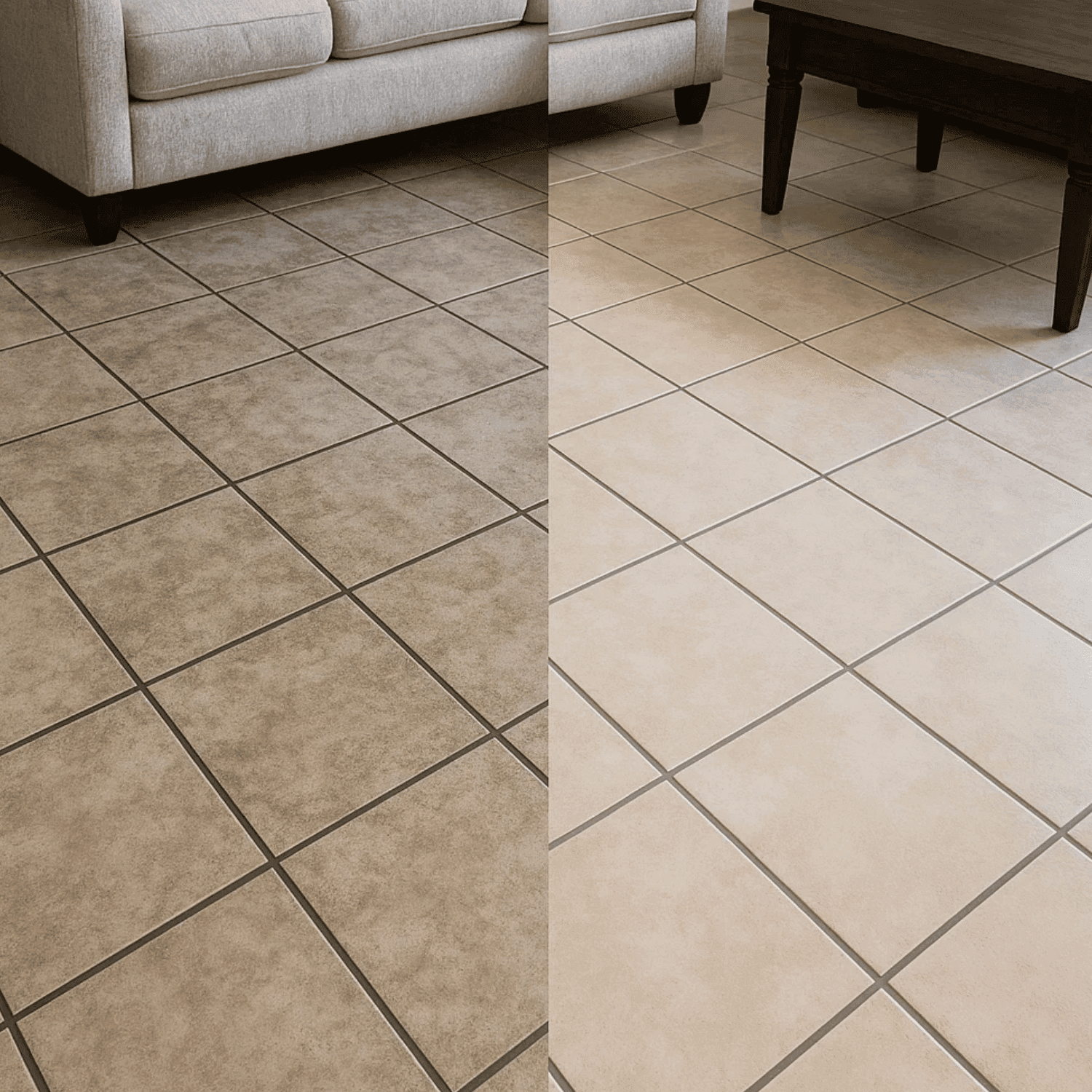
With the soil broken loose and suspended in the solution, we rinse the floor and mop everything up. This is typically the step that produces the dramatic before-and-after difference. Grout that appeared permanently discolored reveals its original shade underneath.
Where Tile and Grout Cleaning Has the Biggest Impact
Kitchen Floors
Kitchen tile gets constant use. Cooking grease splatters and migrates into grout lines. Spills are routine. Foot traffic between the refrigerator, stove, and sink creates concentrated wear patterns. The grout in front of the range and along the counter line almost always shows the worst discoloration.
Bathrooms
Shower tile accumulates soap scum, body oils, and hard water mineral deposits. Bathroom floor grout — particularly around the toilet base and vanity — absorbs moisture and develops discoloration or mildew staining over time. If you're seeing dark spots in your shower grout, the surface is overdue for a professional cleaning.
Entryways and Mudrooms
The first hard surface people step onto when they come inside catches the worst of what's on their shoes: mud, grit, moisture, and clay. In Arlington, that frequently includes the iron-rich red clay common across eastern Shelby County and neighboring Fayette County, which bonds to porous grout quickly and stubbornly if left unaddressed.
Laundry Rooms
Detergent residue, lint, and water splashes combine to leave a gummy film on laundry room tile over time. Grout in these rooms often turns gray or yellowish without anyone noticing until it's well past due for professional attention.
Tile and Grout Challenges Specific to Arlington
Eastern Shelby County homeowners deal with a few tile-specific issues that come with the local geography and climate.
Hard water mineral buildup. The local water supply leaves mineral deposits on tile surfaces, especially in bathrooms and around kitchen sinks. Those white or yellowish crusty spots accumulate over time and resist normal cleaning methods.
Humidity-driven mildew in grout. West Tennessee's humidity promotes mildew growth in grout, particularly in bathrooms and any room without strong air circulation. Professional cleaning removes mildew at the surface and clears out the soil in the pores that it feeds on.
Construction-phase grit. With Arlington's ongoing residential development — new subdivisions going in along Highway 64 and around the I-269 corridor — construction dust finds its way into homes and lodges in textured tile surfaces and grout lines. It bonds fast in humid conditions and becomes progressively harder to remove the longer it sits.
Red clay tracking. The clay soil common across this part of Tennessee contains iron oxide that stains porous grout rapidly. Entryways and mudrooms in Arlington homes take the worst of it, especially during wet months when the clay is at its stickiest.
Frequently Asked Questions
Can you really restore grout that looks permanently stained?
If the darkening is from accumulated dirt, which is the case nearly every time, yes. We scrub the buildup loose and lift it away, and the grout returns to its original color. We can't change the manufactured shade if the grout was always gray or tan, but we can clean it to reveal what's actually underneath the grime.
What makes the buffer better than mopping?
A mop glides across the face of the tile and only brushes the top of each grout line. The buffer's bristles drop down into the recess and work the cleaner against the grout directly. That contact is something a floor that's been mopped for years has never once had.
Can you handle natural stone tile safely?
Yes. Travertine, slate, marble, and limestone each require a specific pH level. We match the cleaning solution to your stone type so there's no etching, clouding, or surface damage.
How long does a typical kitchen and bathroom job take?
A standard kitchen plus one bathroom usually runs 90 minutes to two hours. Larger whole-house tile jobs — common in some of Arlington's newer homes with tile throughout — can stretch to half a day depending on total square footage. The floor is walkable immediately when we finish.
How do I know when my grout needs professional cleaning?
When your grout lines are visibly darker than the surrounding tile after mopping, that's the signal. Most Arlington homes hit that point every 12 to 18 months. Kitchen floors with cooking grease exposure and shower tile battling soap scum may reach it sooner.
A Deeper Dive on Grout
Tile questions tend to multiply once you start paying attention to your floors. Safe-Dry's national tile resource explains why grout lines get dirty and how to restore them, with separate guides on shower tile, grout haze, and how porcelain and ceramic differ. It's worth a read if your kitchen floor has been bugging you for years.
Tile and Grout Cleaning Across Eastern Shelby County
We clean tile floors throughout Arlington, Lakeland, Oakland, Atoka, Bartlett, and Eads. Call 901-290-7851 for a quote. We can typically estimate the job over the phone based on your square footage and tile type, and we're available 24/7 for scheduling.